


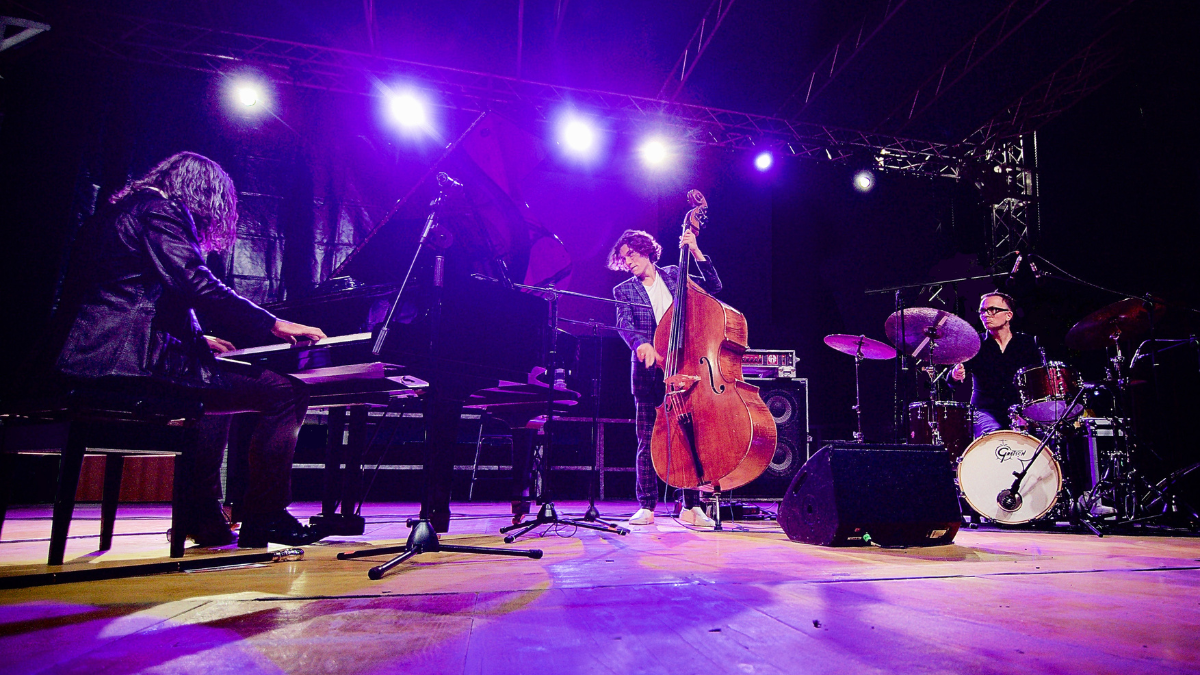
As one of the acts credited with bringing heavy metal to the cultural forefront, Black Sabbath’s catalogue has been celebrated and reinterpreted countless times over the decades.
For Adam Wakeman, former touring keyboardist and collaborator with Black Sabbath and Ozzy Osbourne, Jazz Sabbath is both a playful tribute and a serious exploration of Sabbath songs through a jazz lens.
“It’s tongue-in-cheek with the background story, but I wanted it to come across as credible musically,” Wakeman explains. “It’s a brilliant project to get your teeth into. It’s a really fun thing for a pianist.”
In Jazz Sabbath canon, Wakeman portrays Milton Keanes, a disillusioned jazz pianist from the 1960s who, through a series of misfortunes and bad luck, had his trio’s debut album shamelessly stolen by a then-unknown rock group from Birmingham.
While Black Sabbath went on to become titans of heavy metal, Keanes and company languished in obscurity until the discovery and release of the Jazz Sabbath master tapes in 2020. With the “truth” now out in the open, they began playing shows and releasing records, presenting the iconic Sabbath catalogue in its “original” jazz-trio form.
In reality, the idea for Jazz Sabbath was born in Berlin bar on a night off during an Ozzy Osbourne tour. Wakeman found himself sharing a drink with one of Ozzy’s security guards, who was eager to hear Wakeman play Black Sabbath on the bar’s piano.
“I said, ‘Oh, it’ll sound terrible,’” Wakeman recalls. “But I could do an improvised jazz version of ‘Iron Man.’” The pair ended up drinking and playing piano until the staff wanted to go home.
The idea lingered with Wakeman as he returned to his hotel. “I thought this could be quite an interesting project, making arrangements of Black Sabbath in the jazz-trio kind of style.”
Before long, Wakeman had dreamt up a Spinal Tap-esque backstory for the project, ultimately enlisting the help of actor Robert Powell and a host of musical friends to bring the Jazz Sabbath universe to life in a mockumentary.
Musically, Wakeman certainly has the chops to reimagine Black Sabbath as sensible, sophisticated jazz. Son of longtime Yes keyboardist Rick Wakeman, Adam’s diverse resumé extends far beyond metal, including collaborations with Annie Lennox, Travis, and a swath of side-projects ranging from pop to prog. Both onstage and in-studio, Jazz Sabbath is a decidedly educated interpretation of the source material.
“Some songs I would take the guitar riff and make that the main theme on the piano, and others I’ll take the vocal melody and work with that, changing the chords underneath,” Wakeman explains.
Jazz Sabbath’s approach and musicianship have earned praise from the international jazz community. Although Wakeman initially thought the project would only appeal to a small group of metal fans, Jazz Sabbath has been embraced by jazz enthusiasts, culminating in a growing number of appearances at festivals around the world.
“People come and have a chat afterwards and say, ‘I’d never listened to a Black Sabbath album… but I thought I’d come along out of curiosity,’” Wakeman says. “It doesn’t matter if they don’t know the back catalogue; musically, it carries it.”
As Jazz Sabbath get ready to visit Alberta amidst a busy summer of global touring, Wakeman remembers what his late employer and friend thought of his work.
“I spoke to the guys, I spoke to Sharon, I spoke to Ozzy, and they gave their endorsement. That, for me, was what I needed,” Wakeman says. “If they weren’t happy at the time, or thought that it was disrespectful or something, then I wouldn’t have done it.”
See Jazz Sabbath live in Calgary on June 13, and in Sherwood Park on June 14. Find info and tickets here.
Watch Jazz Sabbath perform “Into the Void” live at the Leverkusen Jazz Festival in 2025: